

Damp & Structural Timber Defect Investigation of a 1930s Terraced House
A mortgage lender’s valuation had flagged possible damp and structural-timber problems at a 1930s solid-brick terraced house in Handsworth, Birmingham. AXIOS Building Consultants was appointed to investigate the specific concerns, taking moisture readings, checking the previously injected damp-proof course and sub-floor ventilation, and inspecting the roof timbers, and concluded that there was no damp or timber defect at the property, explaining the elevated surface readings the valuer had picked up.
Project Overview
When a mortgage lender’s valuation surveyor flagged possible damp and structural-timber issues at a 1930s solid-brick terraced house in Handsworth, the sale, and the mortgage, needed those concerns resolved. AXIOS Building Consultants was appointed to carry out a focused defect investigation into the two specific issues raised, and to report clearly on whether a genuine problem existed.
A valuer’s note of ‘possible damp’ or a timber concern is often enough to stall a purchase, even where the building is sound. The value of a targeted defect investigation is that it either identifies a real defect and the works needed, or explains the readings and gives the lender and the owner the evidence to proceed. AXIOS was instructed to do exactly that, a non-intrusive inspection limited to the areas of concern, reported plainly.
The AXIOS Role
AXIOS carried out a focused, non-intrusive defect investigation and reported on the specific concerns:
- Inspected the property with the mortgage valuer’s specific damp and timber concerns as the brief
- Took moisture-meter readings across the internal plastered walls
- Checked the previously injected damp-proof course and the ground-floor sub-floor air vents to the front and rear elevations
- Inspected the roof space, the cold-roof construction, insulation and structural timbers
- Reviewed the sub-floor timbers, skirtings and floors for any sign of wet or dry rot or insect attack
- Set out clear conclusions distinguishing genuine defects from readings explained by other causes
The Property
The property is a traditional 1930s solid-brick terraced house of two storeys, with a pitched timber roof covered in concrete interlocking tiles and a ground-floor bay to the front. A render finish had been applied to the front elevation at ground-floor level, with fair-faced brickwork to the front first floor and to all rear elevations; the windows had been replaced with UPVC double-glazed units. The ground and first floors are suspended timber, ventilated by air bricks front and rear, while the rear kitchen sits on a concrete slab. The rear kitchen and rear lounge walls had previously received an injected chemical damp-proof course. Because the concerns centred on damp and timber, the investigation focused on the damp-proof course, the sub-floor ventilation, and the roof and floor timbers.
The Investigation
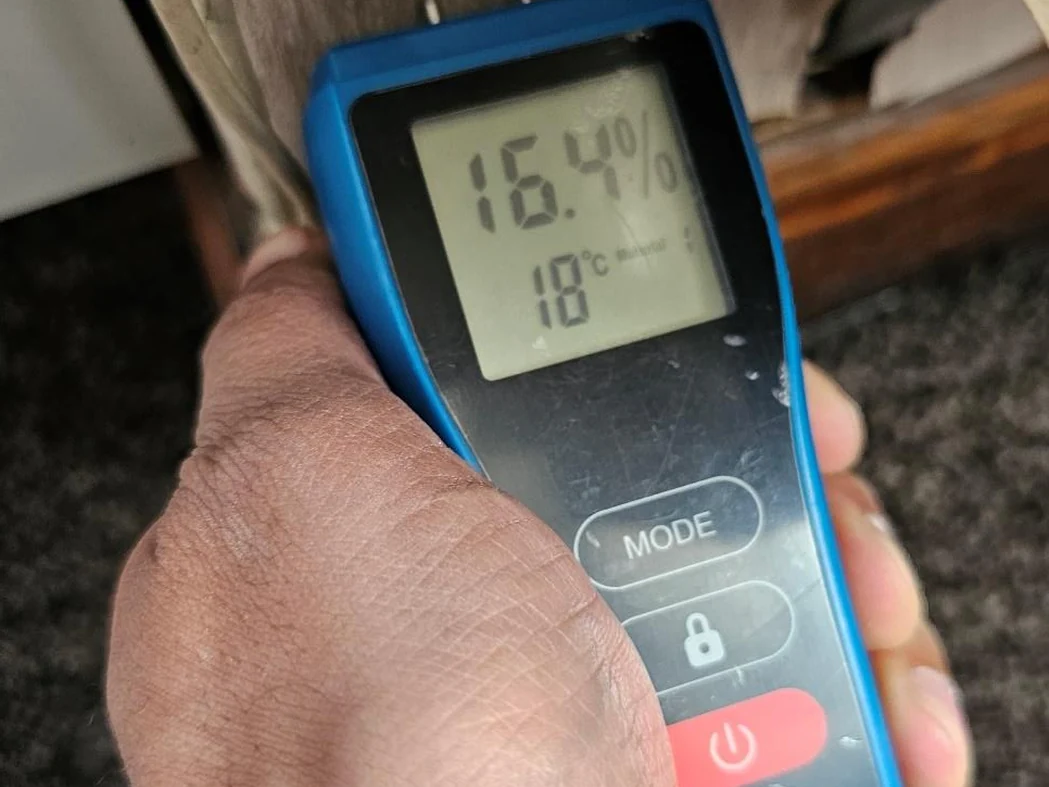
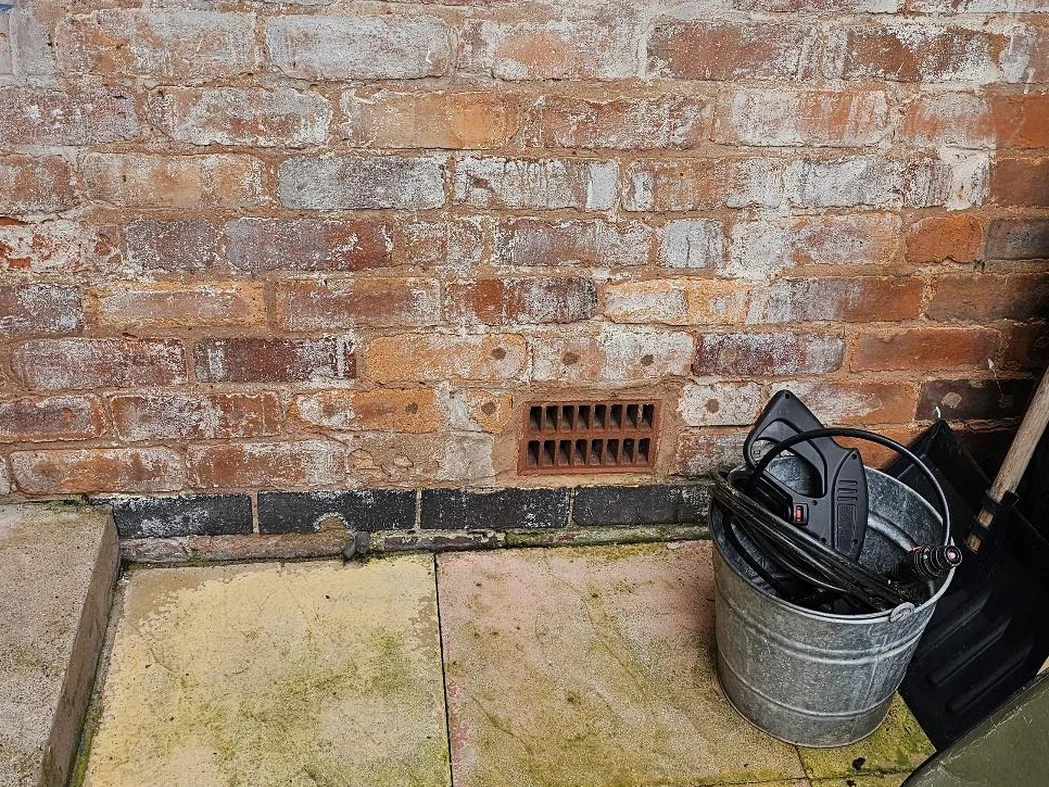
Moisture-meter readings across the front, rear and kitchen walls fell between roughly twelve and sixteen per cent, the kind of surface reading that can prompt a damp note on a valuation, with no visible signs or odour of damp internally. Rather than take the readings in isolation, AXIOS examined the possible causes. The original damp-proof course and the newer injected DPC to the rear kitchen and rear lounge were intact and had not been bridged, and the sub-floor air bricks serving the suspended timber ground floor were clear front and rear, so ventilation to the timbers was unaffected. In the roof space, the cold-roof timbers, underfelt and insulation were sound, with ridge ventilation and gable air bricks to the mono-pitched rear roof; the internal skirtings, floorboards and structural purlins and rafters were likewise in good order, with no wet rot, dry rot or insect attack anywhere inspected.
Conclusion
AXIOS concluded that there was no damp or structural-timber defect at the property, which had been well maintained internally and externally. The surface readings sat within a normal range and were consistent with everyday causes rather than rising or penetrating damp, with the injected damp-proof course performing as intended and not bridged. The rainwater goods were sound and free of overflow or open joints, and the roof and floor timbers were free of rot and infestation. As a sensible precaution, AXIOS suggested the owner obtain any warranty or further detail for the injected DPC if available, though this was not essential to the conclusion.
Site Photographs
Photographs from the AXIOS inspection: the front and rear elevations and bay, the concrete tiled roof and ridge vents, the sub-floor air bricks, the moisture readings, the injected damp-proof course, and the loft space and timbers. Identifying details have been removed from the photographs and the location is given only to area level.





What AXIOS Delivered
- A focused, non-intrusive defect investigation into the specific damp and timber concerns raised on valuation
- Moisture readings and an assessment of the injected damp-proof course and sub-floor ventilation
- An inspection of the roof space, structural timbers and floors for rot and insect attack
- A clear written report distinguishing the elevated readings from any genuine defect
- Practical maintenance recommendations for the owner
- A concise, signed report suitable to share with the lender
Outcome
AXIOS gave the owner and the lender a clear, reasoned answer: no damp or timber defect, with the readings explained and the injected damp-proof course confirmed as intact and not bridged. By addressing the valuer’s concerns head-on and setting out the evidence plainly, the report removed the uncertainty that a ‘possible damp’ note can create, allowing the parties to proceed with confidence.
A focused defect investigation that answered a mortgage valuer’s damp and timber concerns on a 1930s terrace (moisture readings, the injected damp-proof course, sub-floor ventilation and roof timbers all checked), concluding there was no defect and explaining the readings, so the sale could proceed with confidence.
Worried about damp or timber in a property?
Contact AXIOS Building Consultants for a focused defect investigation and a clear, reasoned report you can rely on.